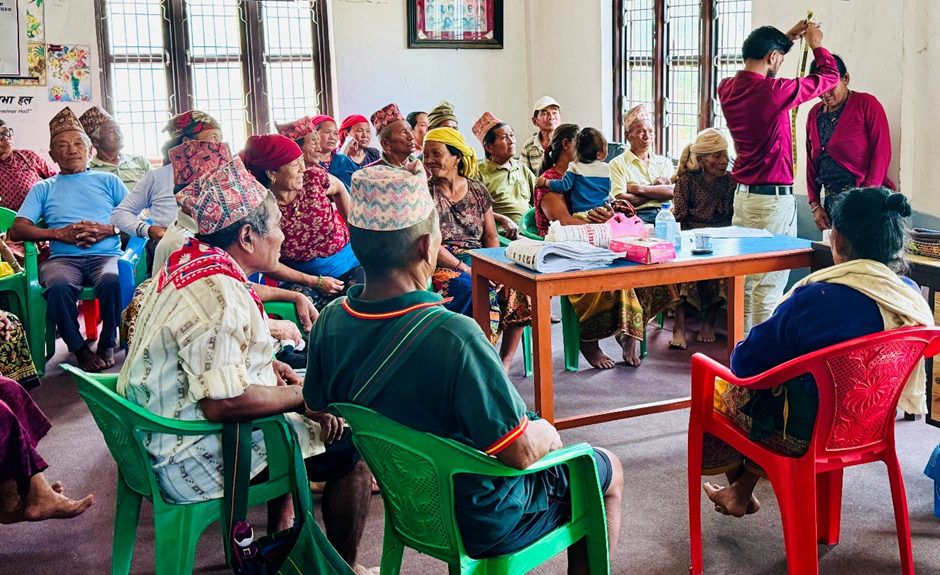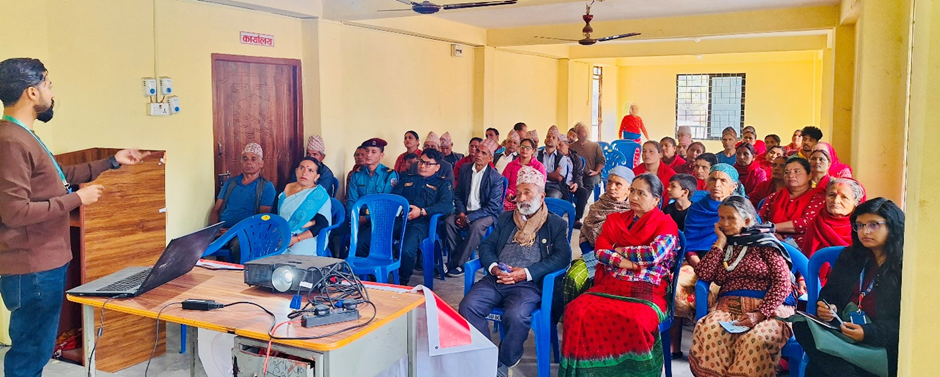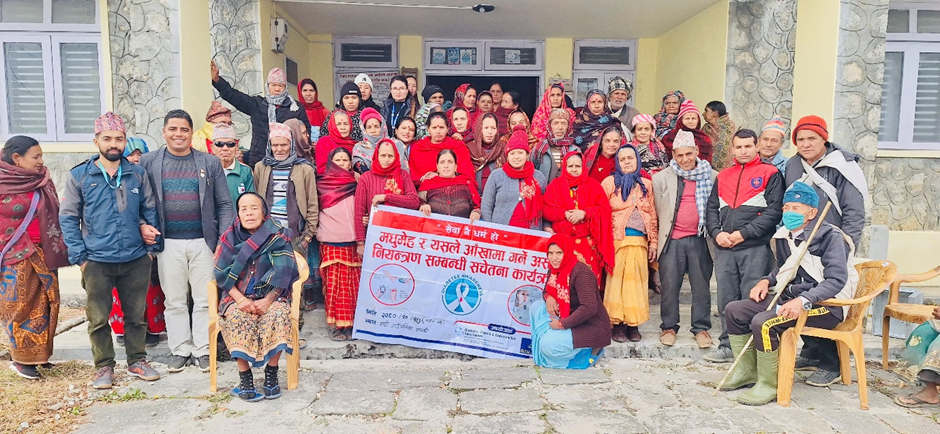
In 2024, we launched a community education
programme using video-based diabetes resources developed by the Vision and Eye
Research Institute of Anglia Ruskin University, UK to support people living in
rural areas, who have poor access to healthcare services. The initiative aims
to help individuals understand better about diabetes and its eye complications
and self-care their diabetes more effectively while also engaging non-diabetic
family members so they can better support their loved ones. Participants also get
their blood sugar, blood pressure, height, weight measured as part of the
initiative. The programme has already been delivered across 73 villages in the
Gandaki Province, reaching 4,325 participants. The programme was highly
effective in improving diabetes knowledge in participants as evidence by the
following improvements:
|
Question |
Before workshop |
After three months |
|
Is diabetes a serious disease? |
33.8% said yes |
91.0% said yes |
|
What is the recommended weekly duration of physical activity? |
1.5% said at least 150 minutes per week |
95.4% said at least 150 minutes per week |
|
Does a diabetic eye examination is different from a routine eye
test? |
9.6% said yes |
67.8% said yes |
|
Should you go for diabetic eye screening even in the absence of
visual symptoms? |
12.7% said yes |
99.7% said yes |
Before attending the workshop, nearly 83% of diabetic patients reported they had never undergone an eye examination for diabetic changes. Three months after receiving the video-based education, 76% reported that they had since attended a diabetic eye examination. Among them, 65.5% were informed by eye specialists that early signs of diabetic eye disease were already present and were managed and advised appropriately, hence reducing the risk of further vision loss and blindness.